%20(1200%20x%20600%20px).png)
The Fleetwood–Knott End ferry service is set to close after no compliant or financially viable bids were received by Wyre Borough Council’s tender process. Despite an 18-month effort to secure a new operator, councils confirmed that no proposal met the financial requirements needed to continue the service.
This comes despite decisive action from Reform Lancashire, which confirmed a full three-year funding commitment after taking office to protect the ferry’s future. That funding provided certainty for passengers, crew and local communities following months of confusion and political misinformation.
At its core, Wyre Borough Council’s contract failed because it simply isn’t viable for operators in today’s economic climate.
The contract required operators to provide vessels, staffing and full day-to-day operation, while relying on fares and limited subsidy to make it work under the terms set by Wyre Borough Council.
At the same time, operators are facing:
This combination makes contracts like these increasingly unattractive and, ultimately, unworkable.
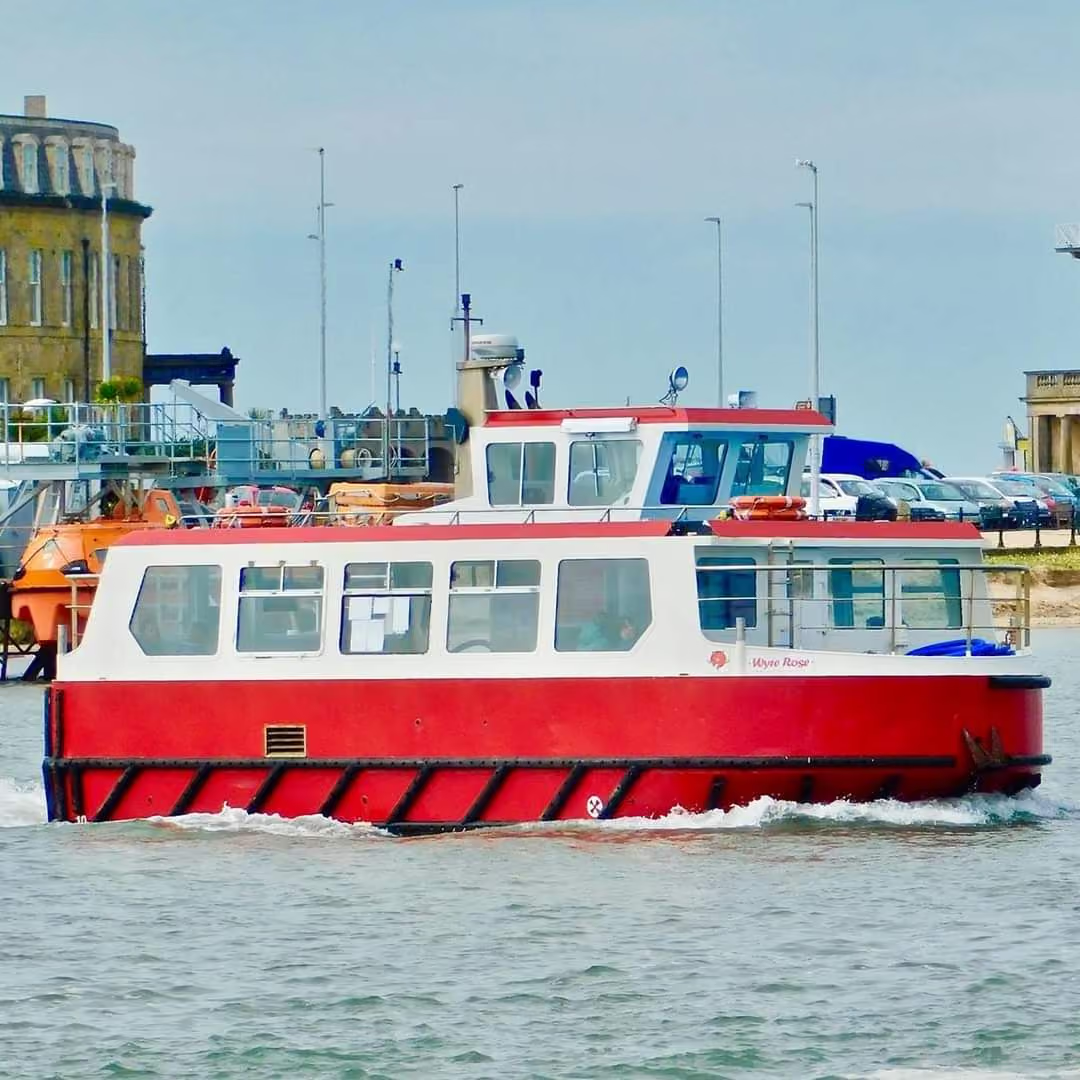
After taking office, Reform Lancashire agreed to continue funding support for this vital service for a further three years.
This was a clear commitment to protecting local transport links and supporting communities across Wyre.
However, funding alone cannot fix a contract that is fundamentally unviable under Wyre Borough Council’s model.
The reality is that both Labour and the Conservatives have contributed to the conditions that led to this outcome.
Years of economic mismanagement, rising costs and pressure on local businesses have created an environment where:
When businesses are squeezed, services disappear. It’s as simple as that.
The ferry has served the community since 1841 and carries around 30,000 passengers a year, providing a vital link between Fleetwood and Knott End.
Its loss will impact residents, local businesses and tourism across Wyre.
Reform Lancashire is clear:
Reform Lancashire will now be writing to both local MPs to push for targeted support measures, including potential business rates reductions or other incentives, to help attract a new operator.
If government is serious about protecting vital local services, it must be willing to back practical solutions that make them viable.
.png)
.avif)
.png)